Showing posts with label Article. Show all posts
Epson Moverio BT-300
ArticleEpson Moverio BT-300
La réalité augmentée continue de se tailler une niche dans l'électronique mobile, et ce coup-ci, c'est Epson qui tente le coup avec ses verres connectés Moverio AR BT-300. C'est une nouvelle génération de ces lunettes plus légères, animées par un processeur Intel Atom X5, et dotées d'un affichage OLED intégré permettant d'afficher du contenu numérique par-dessus la réalité observable devant soi. Epson n'en dit pas plus pour le moment, mais on soupçonne qu'il ne doit pas y avoir une tonne de choses à en dire non plus, vu le peu d'intérêt que suscitent ces gadgets?
Oppo Super VOOC
Article
Oppo Super VOOC
Fully charge the phone in 15 minutes, it's possible? This is what promises load fast Super VOOC of Oppo, which promises to provide some 2,500 mAh in a quarter of an hour to recharge any USB device. This is faster than the fastest of the fast chargers (!) Currently available, the Quick Charger Qualcomm, which makes about 80% of this task in 35 minutes. It remains theoretical for now, the Super VOOC not yet marketable, but the day we can charge his phone in the time it takes for coffee seems close to us suddenly.
FlexEnable
ArticleFlexEnable
profité du MWC pour dévoiler sa propre offrande, de ce côté, sous forme d'un prototype éponyme courbé de manière à servir de bracelet multimédia. Le bracelet FlexEnable devrait, en théorie, avoir les caractéristiques d'un appareil mobile complet, avec commande tactile et applications mobiles, mais pour la démo, seul un écran courbé sur lequel jouent des vidéos en boucle a été présenté. Mais ça suffit pour faire rêver plus d'un badaud au MWC, et avec un peu de chance, FlexEnable trouvera les partenaires lui permettant de migrer vers un écran OLED fonctionnel et pouvant être commercialisé.
Pokemon GO
Android ArticlePokémon GO
Voyagez dans le monde réel et le monde virtuel de Pokémon avec Pokémon GO pour iPhone et Android. Avec Pokémon GO, découvrez des Pokémon dans un nouveau monde : le vôtre ! Pokémon GO est bâti sur la plate-forme de jeu en monde réel de Niantic et utilise des emplacements réels pour encourager les joueurs à découvrir des Pokémon dans leur région. Pokémon GO va permettre aux joueurs de trouver et d’attraper plus d’une centaine de Pokémon pendant qu’ils explorent leurs environs.
La série des jeux vidéo Pokémon a utilisé des lieux géographiques tels que les régions Hokkaido et Kanto au Japon, New York et Paris comme inspiration des environnements présentés aux joueurs. Désormais, c’est le monde réel qui sera votre environnement !
Allez à l'extérieur pour trouver et attraper des Pokémon sauvages. Explorez les villes et les villages autour de vous et dans le monde entier pour capturer autant de Pokémon que possible. Vous saurez que vous êtes près d'un Pokémon car votre smartphone se mettra à vibrer. Après avoir rencontré un Pokémon, visez-le avec l'écran tactile de votre smartphone et lancez une Poké Ball pour l'attraper. Soyez prudent quand vous essayez de l'attraper, car il peut s'enfuir ! Recherchez également les PokéStops situés près de certains des endroits tels que des créations artistiques publiques et des monuments historiques, où vous pouvez obtenir des Poké Balls et d'autres objets.
technologynews 2016
ArticleLeEco is one of a growing number of young Chinese companies vying for global attention, and one of its most fun (and extravagant) products is called Le Syvrac. Equal parts mountain bike and smartphone, this fiendish invention runs a version of Google's Android software on a 4-inch display nestled in between the handlebars. It's powered by a quad-core processor with 4GB of RAM, and also has laser pointers, a heart rate sensor, and a built-in speaker and camera.
The LeEco Le Syvrac is already on sale in China, with prices ranging from $800 to more than $6,000 for the all-carbon frame option. Digital Trends reports that LeEco wants to bring its smart bike to the United States later this year.
playstation 5
ArticleThe PlayStation 5 is coming but when and in what form?
- Update: Update: With each announcement Sony seems to be focusing less and less on the home console. Now we've heard the news that Sony has formed a new company to focus on mobile games, indicating that the future of PlayStation might be more mobile than we'd previously thought.
It probably won't happen this year, but the PS5 is almost guaranteed to arrive on shelves eventually. Yep, we'd bet our game collection that the Sony PlayStation 5 is probably in development right now.
How can we be so sure?
The PlayStation 4 has now sold 35 million units worldwide and has shown no sign of slowing down. There are plenty of excellent games still to come on this generation of hardware (see: the best games on PS4), but the next iteration is right around the bend.
Our wish list for an eventual PS4 update includes HDMI 2.0 connections and an Ultra HD Blu-ray drive for 4K playback, something that should absolutely be possible on Sony's next-generation of hardware.
Velocity Micro jump on Intel's 10-core processor
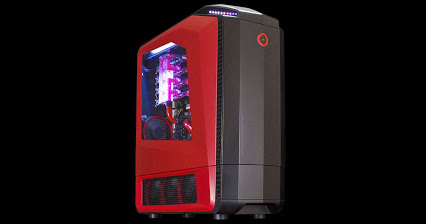
ArticleNow that Intel has officially trotted out Core i7 Extreme Edition processors based on its shiny new Broadwell-E platform, gaming PC makers are coming out of the woodwork with systems that tout these extra-fast chips. You'll now find up to a 10-core processor in models from Origin PC (the Chronos, Genesis, Millennium and Neuron) and Velocity Micro (the Raptor Z95, Raptor Signature Edition and ProMagix HD80). If you like to run multiple apps at once or use software that thrives on multi-core CPUs (such as video editors), you're in paradise.
Get ready to pay a tidy sum for one of these systems. Origin hasn't mentioned pricing for Extreme Edition-equipped models as I write this, but Velocity Micro notes that the lowest-cost PC of its bunch, the ProMagix HD80, starts at $1,799 (and that's likely without the 10-core CPU). That's practically par for the course, mind you. If you're the sort who wouldn't flinch at paying $600-plus for a GeForce GTX 1080 video card, springing for an Extreme Edition processor isn't that much of a stretch.
PS4 20th Edition : La manette
Article
C’est à l’E3 2015 que Sony a annoncé l’arrivée d’une nouvelle manette DualShock aux couleurs de la PS One.
En décembre et en début d’année, la version 20th Anniversary de la PS4, éditée aux couleurs de la PS One avait retourné les fans. Produites à seulement 12 300 exemplaires, dont 500 destinés à la France, certaines de ces consoles se sont vendues à plusieurs milliers de dollars sur des sites d’enchères.
Aujourd’hui, Sony annonce la sortie de la manette uniquement, en édition limitée, sans communiquer sur le nombre d’exemplaire disponible.
carte mémoire
ArticleUne carte mémoire est une unité de stockage de données numériques utilisée le plus souvent pour le stockage des clichés numériques dans les appareils photo numériques (APN), pour la sauvegarde de parties sur consoles de jeux vidéo, mais aussi dans des lecteurs de musique MP3 ou des appareils électroniques professionnels tels que des stations totales.
L'actuelle spécification SDHC définie les Classes 2, 4, 6, 8 et 10 comme suit:
Classe
|
Vitesse minimale
|
2
|
2Mo/s
|
4
|
4Mo/s
|
6
|
6Mo/s
|
8
|
8Mo/s
|
10
|
10Mo/s
|
nanostructured
Article
Using nanostructured glass and a powerful laser, the scientists developed a 5D writing process which allows them to store the data within the glass itself.
The glass, which has rather understandably been classified as a 'Superman crystal', has some pretty incredible properties including the ability to withstand temperatures of up to 1,000 degrees. At room temperature the scientists say the data has an infinite lifespan.
Game boy
ArticleIf you want a handy illustration of how far consumer technology has come in the last 30 years, just take a look at this video from electronics wizard Wermy, who has gutted an original Game Boy and modified it to play hundreds of console games. From the outside, the device looks like one of Nintendo's 27-year-old handhelds, but its gray plastic shell hides a rechargeable lithium ion battery, a Bluetooth receiver, and a Raspberry Pi.
A series of pictures show how the "Game Boy Zero" was put together, complete with new buttons, updated ports, and a new screen — necessary because the original Game Boy could only manage monochrome games. Wermy's version uses a color display that makes it capable of playing more modern games. The tiny Raspberry Pi inside runs Emulation Station, software that lets Wermy play games from not only the Game Boy's back catalog, but from the NES, SNES, and even Sega's Genesis and Master System consoles. Indeed, Wemy says the minuscule machine is powerful enough to run anything up to Game Boy Advance games, a handheld that saw market 12 years after the original Game Boy.
Subscribe to:
Posts (Atom)